
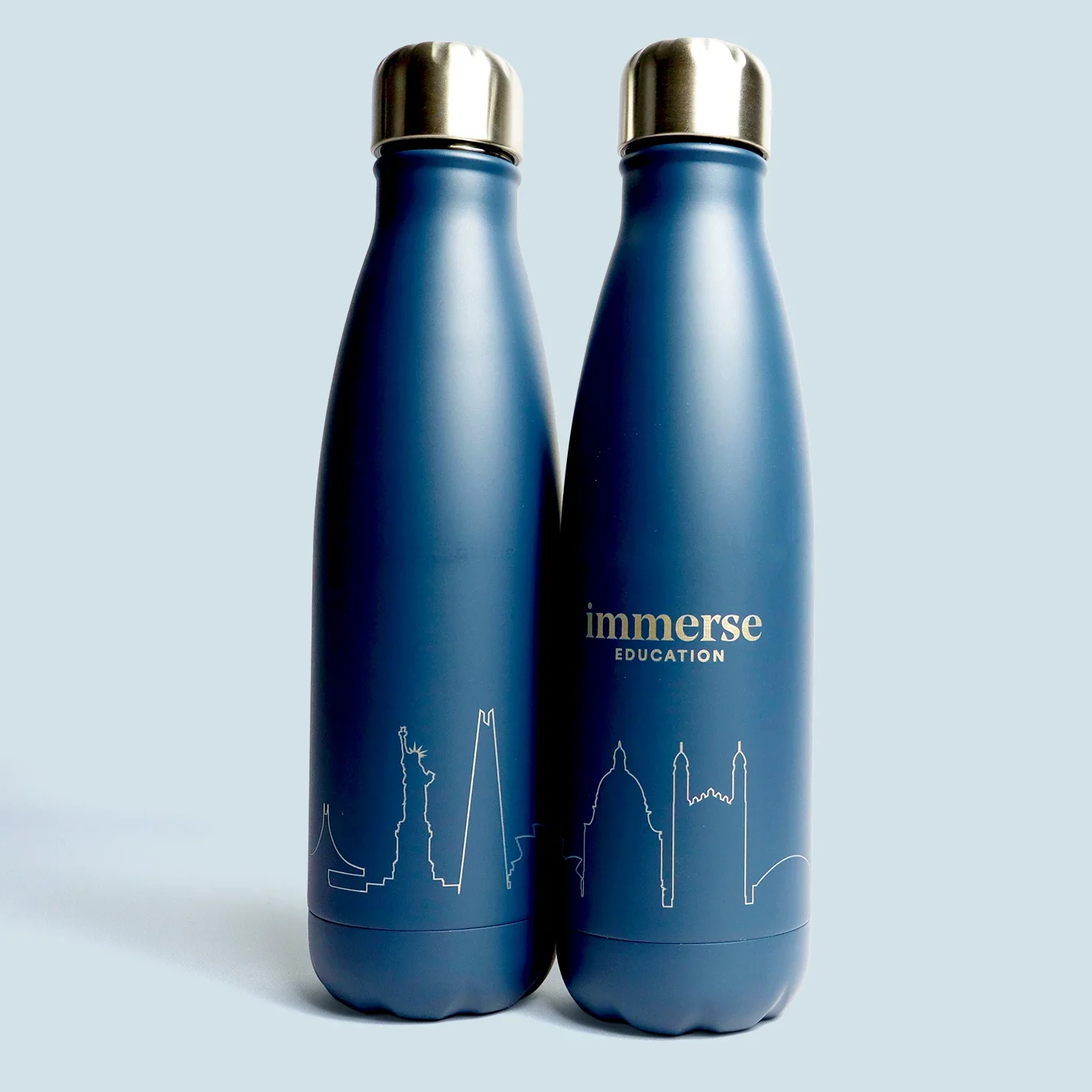
The eco claims on branded drinkware can be confusing, inconsistent and sometimes misleading. Here’s what the labels actually mean and how to make sure your branded merch lives up to its green credentials.
You want to do the right thing. You’ve got a branded drinkware brief to fulfil, sustainability matters to your business, and you’re looking for products that genuinely reflect that. So you start browsing, and within minutes you’re drowning in claims.
BPA-free. Recycled content. Biodegradable. Compostable. Carbon neutral. Eco-friendly.
Every product seems to have at least one of these labels. Some have all of them. But what do they actually mean? And more importantly, which ones should you be paying attention to when choosing branded bottles for your business?
The honest answer is that eco labelling in the promotional products industry is inconsistent, largely unregulated, and frequently used as a marketing tool rather than a meaningful environmental indicator. That’s not unique to branded merch, but it does mean that buyers need to know what they’re looking at.
This guide breaks down every major sustainability label you’re likely to encounter on branded drinkware, in plain English, so you can make genuinely informed decisions and choose products your brand can actually stand behind.
Why Eco Labelling Is So Confusing
There is no single regulated standard that defines what “eco-friendly” means in the context of promotional products. Unlike food labelling, which is tightly governed, the promotional merchandise industry largely self-regulates when it comes to environmental claims. That creates a situation where the same product can be described in half a dozen different ways depending on what a supplier wants to emphasise.
The result is that many businesses end up making procurement decisions based on marketing language rather than actual environmental impact. A product described as “sustainable” by one supplier might carry no meaningful eco credentials at all. Another product with a smaller eco footprint might be described more modestly.
This matters for two reasons. First, the ethical one: if your business is making genuine sustainability commitments, your merch choices should reflect that. Second, the reputational one: the UK Green Claims Code places a legal obligation on businesses to ensure any environmental claims they make are accurate, clear and substantiated. If you use a supplier’s eco claim in your own marketing and it doesn’t hold up, that’s your brand on the line, not theirs.
The good news is that once you know what to look for, the picture becomes much clearer.
The Labels: What They Actually Mean
BPA-Free
What it means: The product doesn’t contain Bisphenol A, a chemical compound used in certain plastics and epoxy resins that has been linked to health concerns, particularly hormone disruption.
What it doesn’t mean: The product is sustainable, eco-friendly or even plastic-free. BPA-free is a health and safety claim, not an environmental one. A product can be BPA-free and still be made entirely from virgin plastic with no recycled content whatsoever.
Why it still matters: It absolutely should be on your checklist for any drinkware product, especially bottles with internal liner coatings. You just shouldn’t let it be the headline eco claim on your brief.
Verdict: Necessary but not sufficient. Treat it as a baseline requirement, not an environmental credential.
Recycled Content / Made from Recycled Materials
What it means: Some or all of the product was made using previously used materials. The most common examples in drinkware are rPET (made from post-consumer plastic bottles), recycled stainless steel and reclaimed natural fibres.
What it doesn’t mean: That the product is 100% recycled, or that it is itself recyclable at end of life. These are two different things entirely. A product can be made from recycled content and still be difficult or impossible to recycle once it reaches the end of its useful life.
What to ask: Ask for the percentage of recycled content. “Made from recycled materials” without a figure could mean 5% or 95%.
What to look for: The Global Recycled Standard (GRS) is a third-party certification that independently verifies recycled content claims and traces the supply chain. It’s one of the most meaningful certifications in this space.
Verdict: One of the more credible claims, particularly when it comes with a clear percentage and third-party certification to back it up.
Recyclable
What it means: The product can, in theory, be recycled at end of life.
What it doesn’t mean: That it will be recycled, that recycling infrastructure exists for it in your recipient’s area, or that the entire product is recyclable rather than just certain components.
The reality: Recyclability depends entirely on local facilities, whether different materials in the product can be separated, and whether the person who receives it actually recycles it. A bottle made from steel, plastic and rubber is often only partially recyclable, and the components may need to be separated first.
Verdict: Meaningful only in context. When you see this claim, ask which specific components are recyclable and through which waste stream.
Biodegradable
What it means: The product will break down naturally over time through biological processes.
What it doesn’t tell you: How long that takes, under what conditions, and what the product breaks down into. These omissions matter enormously.
The problem: Some materials labelled biodegradable can take decades or centuries to break down in landfill conditions, and may release harmful byproducts in the process. True biodegradation requires specific conditions including heat, moisture and microbial activity. Landfill environments typically don’t provide these.
Verdict: Treat with real caution unless a claim comes with a specific timeframe, a description of the required conditions, and third-party verification. Without these, “biodegradable” is almost meaningless.
Compostable
What it means: The product will break down into non-toxic components within a specific timeframe under composting conditions. It’s a more specific and generally more meaningful claim than biodegradable.
The critical distinction: Home compostable and industrially compostable are not the same thing. Industrially compostable products require commercial composting facilities operating at high temperatures. They will not break down in a home compost bin. They will not break down in general waste. In most cases, they will behave exactly like conventional plastic if they end up in the wrong bin.
What to look for: EN 13432 is the standard for industrial composting. OK Compost HOME certification covers home composting. Check which one applies before making any claims.
Verdict: Potentially meaningful, but only if your recipients have access to the right disposal infrastructure. For most branded giveaways, this is an important caveat to flag.
Carbon Neutral / Net Zero
What it means: The carbon emissions produced during the manufacture and distribution of the product have been reduced to zero, or offset to achieve a net zero figure.
What it doesn’t mean: That the product has no environmental impact, or that no carbon was produced. Carbon neutral usually means that emissions have been compensated for through carbon offsetting schemes rather than eliminated entirely.
The controversy: Carbon offsetting is increasingly scrutinised as an approach. Critics argue it can allow businesses to continue emitting by paying for credits rather than genuinely reducing their impact. The quality of offsetting schemes varies significantly.
What to look for: Specifics on how the carbon neutrality was achieved, which methodology or standard was used (PAS 2060 is the UK benchmark for carbon neutrality claims), and whether the approach prioritises reduction before offsetting.
Verdict: Better than no action, but worth scrutinising the methodology. Reduction is always preferable to offsetting, and the best suppliers will be transparent about the difference.
Eco-Friendly / Sustainable / Green
What they mean: Nothing specific. These are unregulated marketing terms with no legal or technical definition in the context of promotional products.
Why this matters: Under the UK Green Claims Code, businesses must be able to substantiate any environmental claim they make. Vague terms like “eco-friendly” used without supporting evidence could fall foul of this obligation, both for the supplier making the claim and the brand using it in their own communications.
Verdict: Treat these as prompts to ask further questions, not as answers. Any supplier worth working with should be able to tell you exactly what makes a product eco-friendly, not just that it is.
Third-Party Certifications Worth Knowing
Certifications don’t tell the whole story, but they do indicate that a claim has been independently verified rather than self-declared. Here are the ones most relevant to branded drinkware:
- GRS (Global Recycled Standard): Verifies the percentage of recycled content in a product and traces it through the supply chain. One of the most credible certifications for recycled drinkware.
- FSC (Forest Stewardship Council): Relevant for bamboo and wood-based products. Confirms that materials were sourced from responsibly managed forests.
- ISO 14001: An environmental management system certification for manufacturers. It doesn’t certify the product itself but indicates that the factory producing it operates to a recognised environmental standard.
- B Corp: A whole-business certification rather than a product-level one, but a meaningful signal that a supplier takes sustainability seriously across their operations.
- EN 13432: The European standard for industrial compostability. If a product carries this, it will break down under industrial composting conditions.
- OK Compost HOME: Certifies that a product will break down in a home composting environment. A more useful standard for products that will end up in domestic settings.
What This Means for Your Brand
It’s worth being clear about something: when you put a branded product in someone’s hands and it carries an eco claim, that claim is associated with your brand, not just your supplier’s.
Your employees, clients and event attendees are increasingly knowledgeable about what genuine sustainability looks like. A branded bottle described as “eco-friendly” that turns out to be made from unspecified materials with no certifications to back it up is the kind of thing that gets noticed. It can undermine the very brand values you were trying to communicate.
The Bottom Line
Sustainability labelling in branded drinkware is improving, but it’s still inconsistent enough that buyers need to know what they’re looking at. The labels that matter most are the ones backed by specific figures, clear conditions and independent certification. The ones that should prompt more questions are the ones that stand alone without any of those things.
At Curious Vision, we’re based in Hertfordshire and our team is always happy to walk you through exactly what you’re ordering, from material composition to end-of-life options. No greenwashing, no vague claims, just straightforward advice and products you can genuinely stand behind.
Send us your brief and we’ll have a free digital proof and a full quote back to you within 24 hours, from as few as 25 units, with delivery available worldwide.
Want branded drinkware you can genuinely stand behind? Get Your Free Mockup & Quote →
Free digital proof included. From 25 units. Quote within 24 hours.
You might also like: